
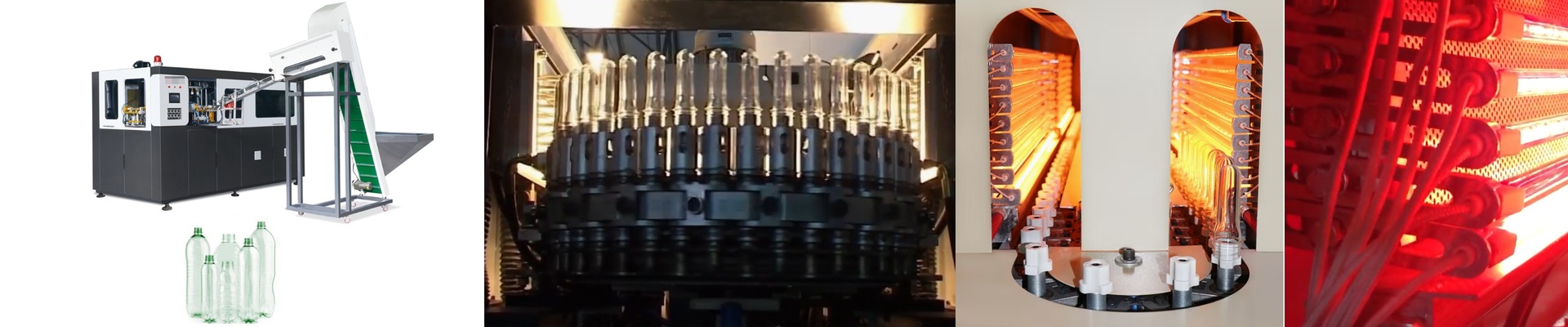
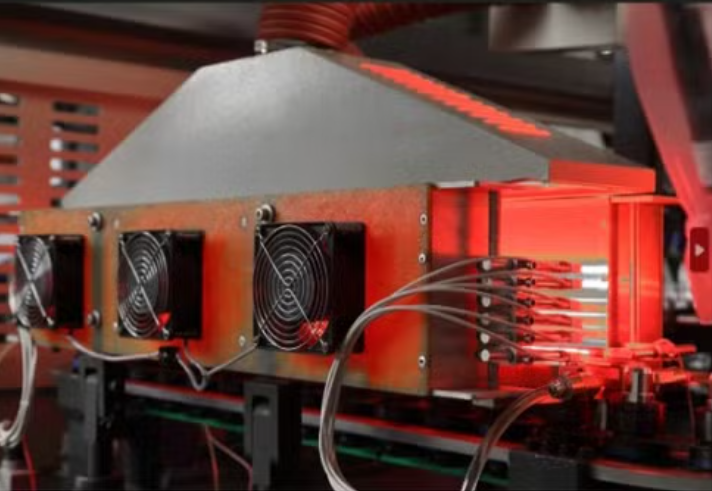
On the floor, an SMF blow molder doesn’t sit around. When the heating tunnel starts drifting, preforms run hot or cold, and you start bleeding shots per hour. You need an IR bulb that drops straight in, behaves like the original, and keeps output steady shift after shift. What actually matters, technically We build SMF-matched IR replacements as engineered emitters, not just generic heat sources. The specs are picked to match the machine’s power density and cycle demands: quartz envelopes for quick response and the thermal shock resistance the heating tunnel demands; halogen or short-wave elements for a fast, controllable ramp-up. Voltage and wattage are kept standard so the existing control profile doesn’t have to be rewritten. Dimensions and base types—R7s, mogul, or custom terminals—are held to tight tolerances so the lamp seats squarely in the reflector and aligns to the preform path. The payoff is repeatable heating across the neck and body, with output that stays within the original tolerance band. Why this works on an SMF line SMF blow molders count on predictable infrared heat to hit stretch ratios and keep bottle clarity. When our bulbs restore the intended heating curve, you see fewer rejects from uneven wall thickness, less color shift, and cycle times that stop jumping around. Energy use trends down because the emitter returns to its designed efficiency and the reflector does its job the way it was meant to. And because the construction holds up and output stays stable, replacement intervals stretch out. That means less planned downtime and a maintenance schedule you can actually count on. A few shop-floor reminders Installation is straightforward, but the heating zone is sensitive. Match voltage and wattage to your SMF model, then check reflector condition and alignment—any warping or soot changes the spot profile and can create hot or cold zones. Handle the quartz by the base only, keep fingerprints off the tube, and run a controlled warm-up to avoid thermal shock. If you run extended hours at high temperature, schedule re-lamping during planned maintenance windows so heating consistency stays locked in.