
Introduction
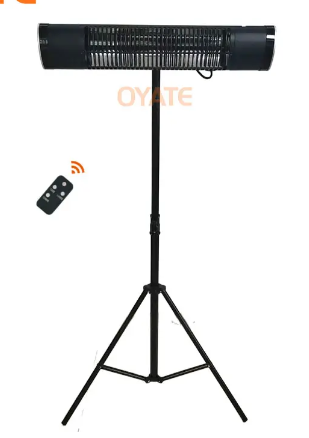
We built this infrared space heater for one very specific reason: art galleries and museums. The goal? Warm up the people inside quickly, without putting a single piece of art at risk. So we went with a shortwave halogen infrared heater. It was the only way to pack a ton of heat into a small space, while keeping both the light and the surface temperature in check.
Technical Deep-Dive
Here’s the thing about this heater: it’s fast. Like, really fast. It hits its target output in seconds. And that speed is exactly why it’s perfect for a gallery. It warms the people directly, so you don’t have to waste energy heating the whole room. The design is also nice and compact, with a slim tube. That means you can place the heater right where people are, without needing some big, bulky housing. Power and voltage are carefully matched to the tube length and element resistance. A shorter, high-wattage tube gives you intense heat in a small package, but it does need proper wiring, fusing, and a solid plan for managing the heat. If you’re installing several of these close together, you have to think about the heat buildup in the surrounding cabinets and controls. Plan your cooling and clearances accordingly.
Material & Design
We chose a quartz tube with a halogen fill. The science is simple: the filament gets hot, the halogen cycle keeps the element stable, and the quartz can handle the shock of turning on and off again and again. The coating on the tube is a big deal, too. It cuts down on glare and shapes the light spectrum, which helps protect sensitive artwork from unwanted exposure. And for the connector, we went with the R7s. It’s a standard, practical choice that makes this heater a simple drop-in replacement for many existing fixtures. The two-pin setup makes wiring a breeze, and the ceramic base won’t soften or warp, even when things get hot.
Application & Benefits
In the real world, this means you get direct, localized heat. People feel the warmth almost instantly, and you don’t have to crank up the air temperature to make it happen. Because it uses radiant heat instead of blowing air, there’s no forced air movement. That means fewer particles stirred up and floating around the space. For the engineers, it’s a clean, compact heater that’s easy to specify, quick to install, and built to last through constant on-off cycles. For the museum folks, it’s all about control. It delivers precise, targeted warmth that doesn’t stress the environment or put the artifacts at risk.