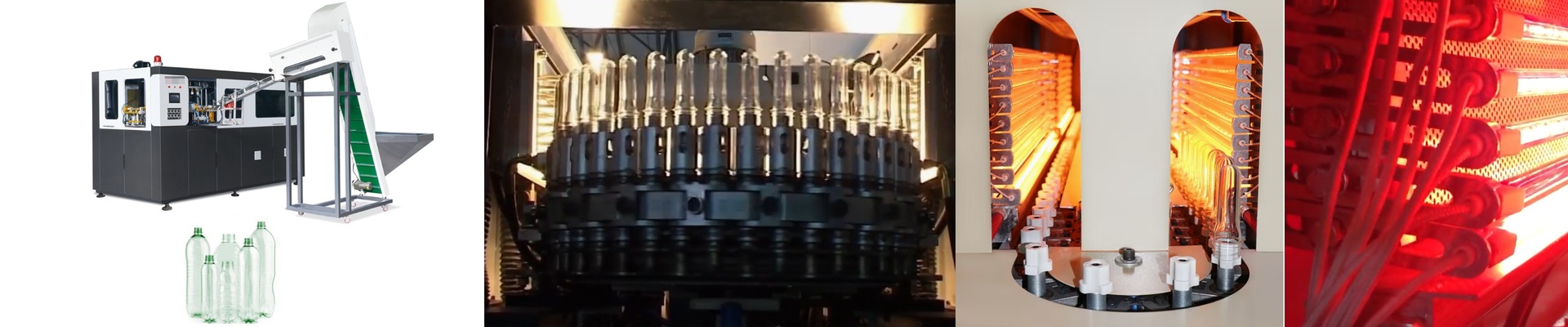
Stop Fighting with Your SIPA Rotary Blow Molders
If you’ve ever pulled a batch of bottles and seen weird wall thickness or, worse, a bunch of failures, you know the frustration. Usually, you start blaming the oven. But here’s a secret from the shop floor: it’s rarely the oven itself. Most of the time, it’s just a power mismatch in your infrared lamps. It happens more often than you’d think. You mix lamps with slightly different wattages or voltages, and suddenly you’ve got “cold spots.” Those spots mess up your preform profile, and that’s where the trouble starts.
Getting the power right
We build our IR lamps to hit SIPA’s original specs exactly. Why? Because in a rotary oven, every single lamp needs to pull the same current. If one lamp is off by even 5%, it doesn’t look like much on a piece of paper. But in the real world? It creates a temperature gradient. Your heating zones stop being uniform, and your bottles start acting up. We make sure the power is consistent across the whole batch so you don’t have to guess.
No fancy installation required
We use high-purity quartz because these things take a beating with constant rapid cycling. As for the fit, we use standard R7s or Sk15 connectors. They’re simple drop-in replacements. You won’t have to mess with your panels or rewire your lamp holders. Most of our high-output tubes are rated for 400V, which just means you get more heat density in a smaller space.
The real-world catch
Here is the thing: you can have the most perfectly matched lamps in the world, but if your reflectors are pitted or oxidized, it won’t matter. The heat simply won’t hit the plastic. If you want to actually see the benefit of precise power, you’ve got to keep those reflectors clean. Our lamps are built for 24/7 production—they’re tough. Just do me a favor and keep your cooling fans clear. These tubes run hot, and if the airflow gets blocked, the quartz won’t last nearly as long as it should.