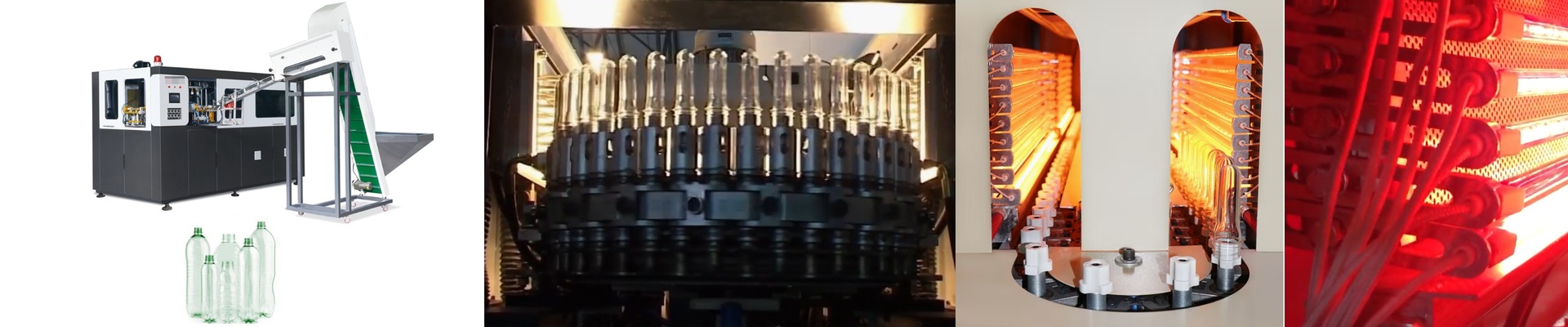

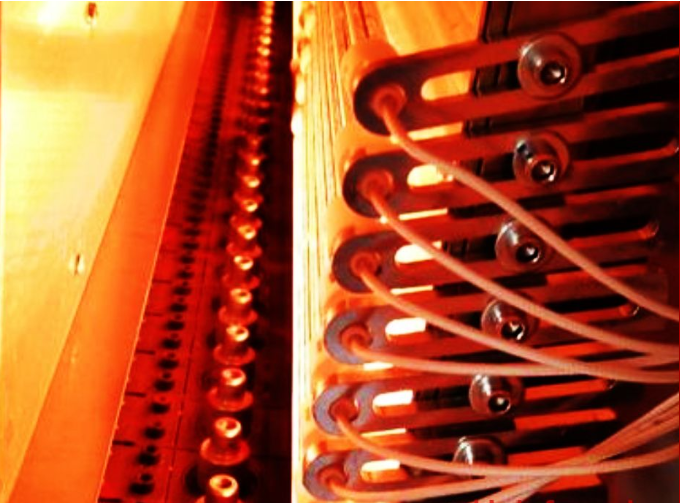
On any PET line, the heating tunnel calls the shots. Under-heated preforms give you weak bottles and blown rejects. Over-heat them, and you’re wasting material and chasing unstable stretch ratios. Most of the time, the root cause is an IR module that’s just plain mismatched—wrong watt density, wrong spectral response, wrong mounting geometry. You end up throttling back the line speed just to compensate.
What actually matters under the hood
We build each IR module to match the specific heating demands of your blow molder, whether it’s Sidel, Krones, SIPA, Husky, SACMI, or Nissei ASB. The emitter choice is dictated by preform wall thickness and cycle time: short-wave halogen/quartz for fast response and a tight focus, or medium-wave when you need a broader, more even soak. Output is specified in actual wattage and voltage, so the existing power supply and control curve stay put. And the physical fit is engineered to the original footprint—emitter length, R7s or custom terminals, bracket spacing, and tunnel clearance—so you can swap it in without touching the reflector assembly.
Where you feel the payoff
You see the gains right where it counts: uptime and scrap. When the module matches the OEM heating profile 1:1, preform temperature stabilizes across the tunnel. Hot spots and cold seams drop off, and biaxial stretch stays consistent. Fewer jams. Fewer pinholes. Less downshifting just to chase quality back. Energy use goes down because you’re not constantly reheating or overshooting. And since the build matches the machine’s duty cycle, replacement intervals stretch out, which cuts down on spare inventory and maintenance labor.
The fine print that keeps it running
Installation is straightforward on most machines, but the details make or break it. Matching the old connector is only half the job. You also need to align the control type (SCR, PID, or on/off), thermocouple location, and reflector condition to avoid temperature drift. **IR performance lives or dies on reflector cleanliness and proper preform rotation.**Dirty reflectors and misaligned spindles will tank even the best module. Schedule the swap during a planned stop, and verify the new heat profile against your critical quality parameters before you ramp back up.