
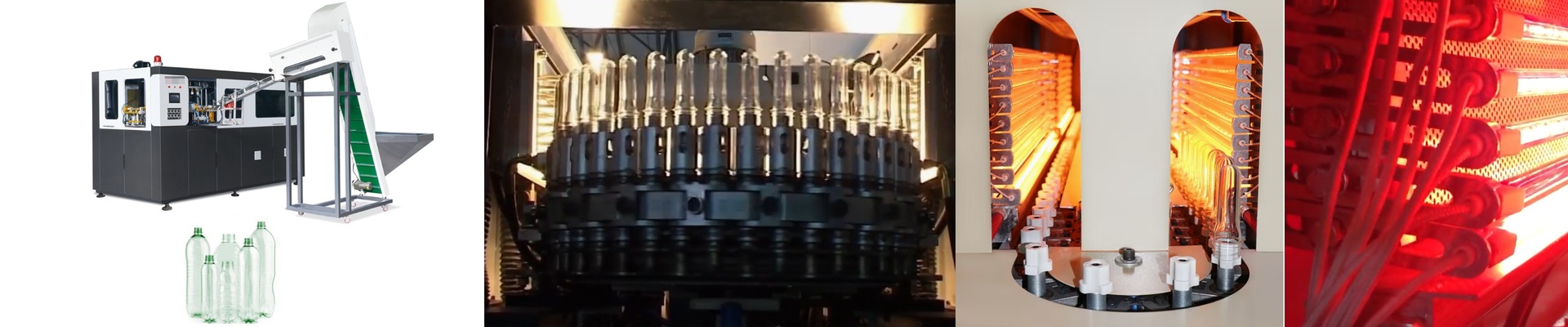
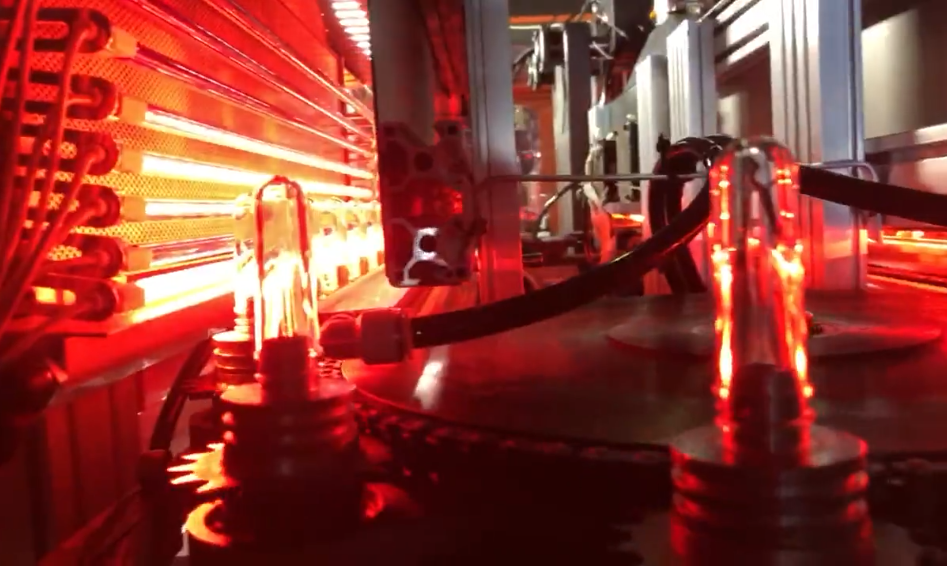
On the line, the SIPA SFL 4/4 behaves itself when the preform heat profile holds steady. The moment it starts to drift, you see it right away—PET bottles with thin spots, blown seams, or top load that’s all over the place. If the heating tunnel is constantly chasing setpoints, you’re losing cycles and generating scrap. The SIPA SFL 4/4 linear blower IR bulb is built to bring the machine’s heating behavior back to where it should be, without having to re-tune the whole system.
What matters, technically
We built this infrared emitter for the SFL 4/4’s linear heating setup, using a short-wave halogen design inside a quartz tube. It delivers fast, directional energy straight into the preform wall. The geometry and mounting match the OEM footprint, and the R7s connector drops right into the existing lamp holders—no adapter brackets, no rewiring in the field. Power and voltage are chosen to keep the heating tunnel inside the SFL 4/4’s control window, so the PID response stays predictable and repeatable. The payoff is quicker return-to-setpoint after changeover, and less temperature swing across the row.
Why this works on a linear blow molder
With linear blow molding, timing is everything. The preform needs the right temperature profile just before stretch and blow. This bulb hits that mark by keeping radiant output consistent, so the first bottle after start-up and the thousandth bottle in the run see the same heating curve. That stability cuts scrap, keeps bottle weight in spec, and lets you hold higher line speeds without chasing temperature every hour. Over a full year, fewer lamp changes translate into less downtime and fewer spare-part line items.
The practical details
Installation is straightforward, but the quartz tube is sensitive to oils and contamination—handle it with a clean glove and wipe the surface before mounting. Make sure the lamp orientation and alignment to the reflector path are correct; misalignment shifts the hot zone and can drive uneven heating. Plan replacement during scheduled stops, because the bulb comes up to full output quickly and shouldn’t be serviced while it’s energized.