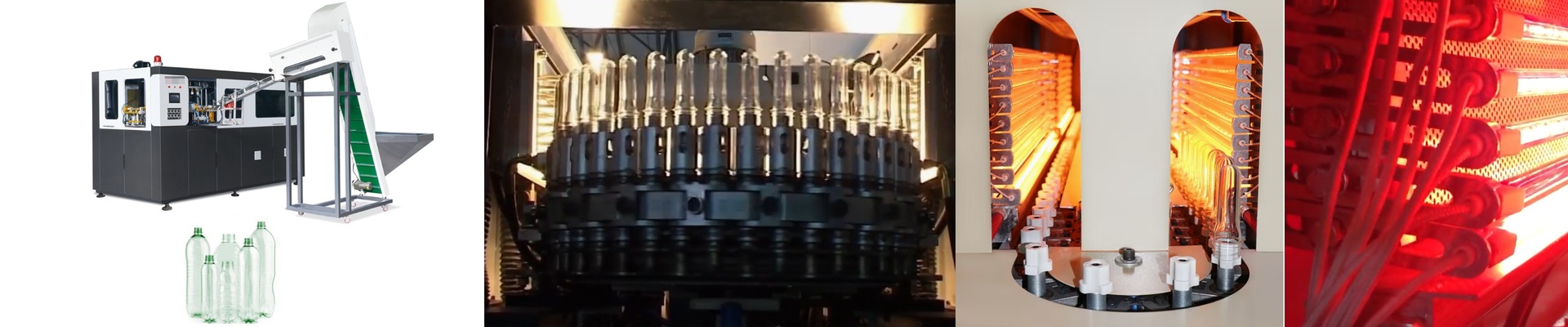

Downtime on a blow molder doesn’t just cost minutes—it costs you output, sanity, and money. One heating tunnel lamp goes dark, the line stops, preforms cool down, and you’re already behind. Then you’re chasing spares, paying overtime, and explaining to everyone why the numbers slipped. You don’t need a lecture. You need a plan that keeps those heaters lit and the machine turning.
What matters under the hood
On Krones lines, the heater lamps are short-wave infrared emitters—halogen quartz, built for fast response and stable output in the preform heating tunnel. Inside is a high-purity quartz tube with a tungsten filament, running at voltage and wattage matched to the OEM’s heating profile. The spectral output is tightly controlled so you hit the right preform surface temperature without cooking the neck. Most use an R7s connector and are built to exact mounting geometry, so the emitter seats square, aligns with the reflector, and lays down repeatable heat across the preform wall.
Why this is the right fit on a Krones line
On a Krones stretch blow molding line, heating consistency is the line between good bottles and scrap. A properly matched lamp holds the set temperature window, so stretch is stable and you see fewer pinholes and stress marks. The fast start-up cuts warm-up time after a stop, so you get back to full cycle speed quickly. Because the emitters are sized to OEM spec, reflector efficiency stays high—less energy per bottle, lower operating cost. In the real world, you can run these lamps 5,000+ hours with minimal output drift, which means fewer changeovers and less downtime.
The details that keep you out of trouble
Installation is straightforward, but alignment is everything. A lamp that’s even slightly off-axis creates a hot spot and drives uneven wall thickness. Check the connector type and voltage, and make sure the terminal block is clean and tight—loose connections give you intermittent failures that look like control problems. **Watch the environment.**If the tunnel runs above design temperature or airflow is restricted, heat buildup shortens filament life. Keep spare mounting clips and reflectors on hand, and when you replace a lamp, take a quick pass through the heating zone wiring and reflectors. A little inspection now prevents a midnight call-out later.